
What separates a bold idea from harmful language? In our public spaces, people often struggle with sharing their opinions in ways that avoid causing harm. We all have the right to speak, even when our views are not popular, but words can leave deep marks.
At times, a comedian might push the envelope with a risky joke, or a social media leader might choose to silence critics. These moments make us ask: when does a free discussion cross the line into dangerous territory?
This post takes a closer look at the moral limits around our everyday debates. It explains when open conversation might start to hurt and offers ideas on how we can protect both our freedom to speak and the respect everyone deserves.
free speech vs hate speech: Clear Moral Boundaries
Free speech lets us share our thoughts openly, even if those ideas are a bit controversial. Under the First Amendment, a wide range of opinions is protected. Even language that some might call hateful stays safe as long as it doesn’t spark immediate violence.
Hate speech, however, is a trickier issue. It usually refers to words that many find hurtful or harmful. And honestly, where do we draw the line? Think about a comedian’s edgy joke, NFL players protesting during the national anthem, or even a president blocking critics on Twitter. Each of these moments ignites a debate about when free expression steps over the line into dangerous territory. One example might be: "Before rising as a political leader, he blocked dissenting voices online, sparking questions about the limits of free speech."
At its heart, free speech is about sharing ideas without fear of government censorship. In contrast, hate speech involves language that might incite harm, though it remains legally protected if it doesn’t pose an immediate threat. Some legal experts, a former civil liberties leader and a law professor, for instance, believe that the best response to hateful talk is even more free speech, rather than censorship.
- Speech that incites immediate violence isn’t protected.
- What one person sees as a derogatory remark might be a valid political or religious statement to someone else.
- The context and intent behind words are key to understanding their impact.
- Well-known examples show us where free expression blurs into harmful speech.
In truth, these boundaries are fluid. What seems like hate speech to one person might come off as bold free speech to another.
Legal Framework Governing free speech vs hate speech

The First Amendment of the U.S. Constitution is like the sturdy framework that supports our right to speak freely. It protects our ideas and words, even if they might hurt or offend someone. In simple terms, the government usually can’t punish you for what you say. In everyday life, this means that even hateful speech is allowed unless it directly calls for immediate violence. It’s a constant challenge to keep our free speech rights strong while also making sure we stop clear and immediate harm.
First Amendment Doctrine
The First Amendment doesn’t single out hate speech as something extra to worry about. Instead, it blocks most government actions against any type of expression. Courts have stuck to this idea for years, saying that only words meant to cause direct harm can be excluded from protection. This approach is key because it lets all kinds of views, no matter how unpopular, be heard. For instance, a speaker’s hard-hitting remarks are still okay under the law as long as they don’t spark immediate, illegal actions.
Supreme Court Precedents
Important court cases have helped shape our understanding of free speech. Decisions like those in Brandenburg v. Ohio (1969) and R.A.V. v. City of St. Paul (1992) show that even hateful language is mostly covered by the First Amendment. The courts have often thrown out rules that tried to ban offensive language because they were too vague or overreaching. These decisions make it clear: the Constitution protects even words that many find disturbing, as long as they don’t call for immediate violence.
Narrow Exceptions for Incitement
There is a small exception in the law: if someone is clearly trying to stir up immediate illegal actions with their words, those words aren’t protected. But figuring out exactly when words turn dangerous is tricky and can be very subjective. To cut it clear, there needs to be strong evidence that the language will lead directly to lawless behavior. This thin line is something both lawmakers and judges wrestle with in a world that’s always changing.
Historical Evolution of free speech vs hate speech
In the early days, governments and institutions tried to limit hurtful language by enforcing strict rules over what people could say. These rules were meant to block language seen as dangerous, but they often ended up silencing important discussions that are vital for democracy. Scholars later pointed out that these measures unintentionally stifled open conversation, setting the stage for ongoing debates.
By the mid-20th century, society began to value the right to speak freely, even when opinions were controversial. Laws and cultural views evolved to support the idea that protecting all speech, even speech that might offend, was key to a vibrant, open community. This shift marked a clear move away from the earlier, stricter approaches.
Today, academic debates continue as researchers struggle to create a clear, universal definition of hate speech. Experts note that over time, countless definitions have emerged, highlighting the challenge of balancing the right to express oneself with the need to prevent harm. Detailed studies, even from institutions like the NIH, remind us that it remains tough to align legal rules with the ever-changing nature of public conversation.
Ethical and societal dimensions of free speech vs hate speech
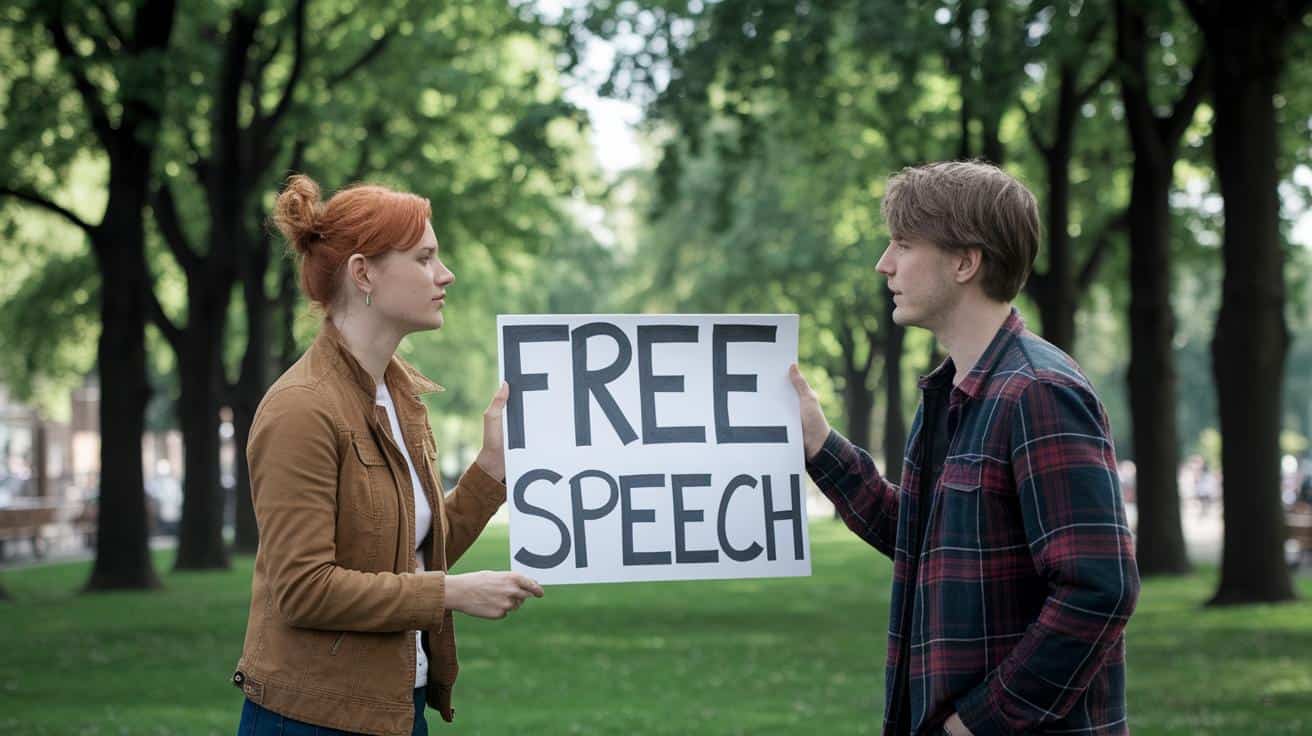
Across North America and Europe, studies show that trying to control language can sometimes backfire. For example, a local board in one U.S. state labeled some political criticisms as hate speech, sparking a lively debate about whether this stifles real disagreement. Similar issues have come up in other countries, with many people feeling forced to hold back their opinions because the rules are too broad, an echo of long-standing worries about too much regulation.
Around the world, it's clear that drawing clear boundaries is no easy task. In parts of Europe, laws now try to separate political speech from personal insults, yet different interpretations still create problems. These examples remind us that while curbing harmful speech is important, overly strict controls can disrupt the natural flow of public debate.
International human rights standards stress that everyone should have the freedom to share diverse opinions, as long as no immediate harm occurs. Global charters suggest that regulations should target direct incitement rather than dampening healthy ideological discussions or criticism.
Recent studies also reveal that counter-speech, engaging in respectful dialogue in response to harmful messages, helps keep conversations open and builds trust. For instance, in Finland, community workshops taught people how to engage politely with opposing views, leading to a marked drop in hate speech incidents.
free speech vs hate speech: Key case studies and examples
Recent surveys and legal reviews are adding fresh insight into the free speech debate. Data from campus studies that reached over 44,000 students, along with the 2025 College Free Speech Rankings, provide new ways to see how we handle speech in fiery discussions. These details point to tighter legal checks and new legislative ideas that push the discussion beyond major headlines.
| Case / Example | Year | Outcome / Significance |
|---|---|---|
| Comedian’s Controversial Commentary | Recent | Raised questions on whether edgy humor should be protected under free speech or considered harmful. |
| NFL Anthem Protests | 2016 | Reignited debates over protest rights and the balance of political expression in sports. |
| President Blocking Critics on Twitter | 2017 | Started legal reviews on digital public forums and the reach of constitutional free speech protections. |
Recent legal struggles also echo broader public opinions. Campus surveys show that many people worry about how institutions and courts should handle speech that might do harm. New legislative ideas and evolving case law suggest that defining the limits between free and hate speech will remain a hot topic for some time.
Digital era challenges in free speech vs hate speech moderation

Today’s digital platforms act like modern public squares where people share ideas and debate issues. Social media companies set their own rules about what counts as hate speech and free speech. Since these companies are private, they don’t have to stick to U.S. law when it comes to hate speech exceptions. Instead, they decide what messages are acceptable based on their own guidelines. This move from constitutional rules to company policies creates a fast-changing scene where the limits of speech can shift quickly.
Private vs Public Forum
In public settings like town halls, the First Amendment protects a wide range of opinions. But on private platforms, companies create rules that don’t always match what the law expects. For instance, one social media site might delete a comment it finds too harsh, even though a similar comment could be allowed in a government-run space. This situation leaves many users wondering how to judge free speech when a company’s policies can override what the Constitution promises.
Moderation Risks
Moderating content on digital platforms is tricky business. Sometimes, automated systems mistakenly remove posts that should be part of an open debate. This can cut off important conversations that help communities understand different points of view. At times, strict moderation has even silenced voices that offer valuable insights, raising concerns about too much control. As a result, people continue to debate how these platforms can protect users from harmful content while keeping speech open and fair for everyone.
Shaping policy: free speech vs hate speech enforcement and reform
Lawmakers have tried to ban hate speech many times, but courts often step in. Judges say these laws are too broad and unclear. Lawmakers aim to stop harmful language, but these rules sometimes limit speech that should be protected. In the U.S., mixing offensive language with dangerous incitement can shut down important debates.
Around the world, the approach looks different. In many parts of Europe, hate speech laws are very specific. They only target speech that clearly incites harm. These rules show that it is possible to keep dangerous language in check while still allowing honest political and personal expression. The different approaches between European countries and the U.S. highlight how tricky it is to balance safety with free speech.
Experts now recommend a fresh path forward. They advise that free speech should be the first priority, even while tackling real threats of incitement. The new idea is to design rules that focus only on clear cases of harm. This way, we can protect our open debates and ensure that passionate language is not confused with violent incitement.
Final Words
In the action, the article traced the shifting definitions and legal framework that shape the debate over free speech vs hate speech while highlighting real cases and digital challenges. It broke down key legal precedents, ethical considerations, and evolving public standards in clear, human terms.
The discussion underscored that responses rooted in more speech often guard our civic discourse. Overall, the insights offer a hopeful reminder that reasoned debate can guide better policies for balanced expression.
FAQ
Frequently Asked Questions
What is hate speech and how does it differ from free speech?
The distinction between hate speech and free speech centers on intent and impact. Hate speech targets groups with harmful messages, while free speech covers expressions that do not incite immediate violence, as seen in college campus debates and public discourse.
When is hate speech not protected by the First Amendment?
Hate speech loses protection when it directly incites imminent violence or harm. Legal standards exclude such speech, so while most offensive language is covered, direct threats and incitement fall outside First Amendment safeguards.
How is the debate addressed on college campuses and online platforms like Reddit?
The debate on college campuses and Reddit shows a contrast between constitutional free speech and private policies. Institutions and platforms balance open dialogue with rules aimed at protecting users from harmful or degrading language.
Does the Supreme Court consider hate speech as free speech?
Supreme Court decisions establish that hate speech is generally protected under the First Amendment unless it incites imminent violence. This legal stance affirms strong free speech rights, with only narrow exceptions for dangerous speech.
What is the difference between hate speech and offensive speech?
The difference hinges on intent and effect. Hate speech specifically targets vulnerable groups to harm or marginalize them, while offensive speech might simply provoke discomfort without the same level of targeted hostility.

