
The U.S. Supreme Court’s decision restoring presidential authority over federal agency commissioners has reshaped the relationship between elected power and unelected bureaucratic independence – a shift some analysts say may redefine modern governance.
In a 6-3 ruling, the Court overturned a 90-year-old precedent that shielded officials at so-called “independent” agencies from dismissal by the President. The case involved President Donald Trump’s effort to remove Consumer Product Safety Commission (CPSC) members Mary Boyle, Richard Trumka Jr., and Alexander Hoehn-Saric. Supporters of the move say the deep state used bureaucratic independence to circumvent the will of the elected president and congress.
Writing for the majority, Justice Clarence Thomas said the earlier framework “unduly constrained the President’s ability to ensure the faithful execution of the laws.” The Court found that commissioners exercising executive power must remain accountable to the President, who is elected by and answerable to the people.
Ninety Years of Separation
The 1935 case Humphrey’s Executor v. United States first granted independence to commissions such as the Federal Trade Commission and later the Securities and Exchange Commission. It established that commissioners could only be removed for “inefficiency, neglect of duty, or malfeasance in office,” effectively insulating them from political oversight.
The Court at the time described the FTC as “free from executive control,” creating a model that later spread to dozens of agencies. Supporters said this structure protected expertise and long-term policy stability. Critics said it blurred accountability by giving unelected officials law-like powers without direct supervision.
Justice Sonia Sotomayor, in dissent, warned the new ruling could “invite executive control where independence was essential to balanced governance.” She said the decision “risks politicizing agencies designed to safeguard the public interest regardless of administration.”
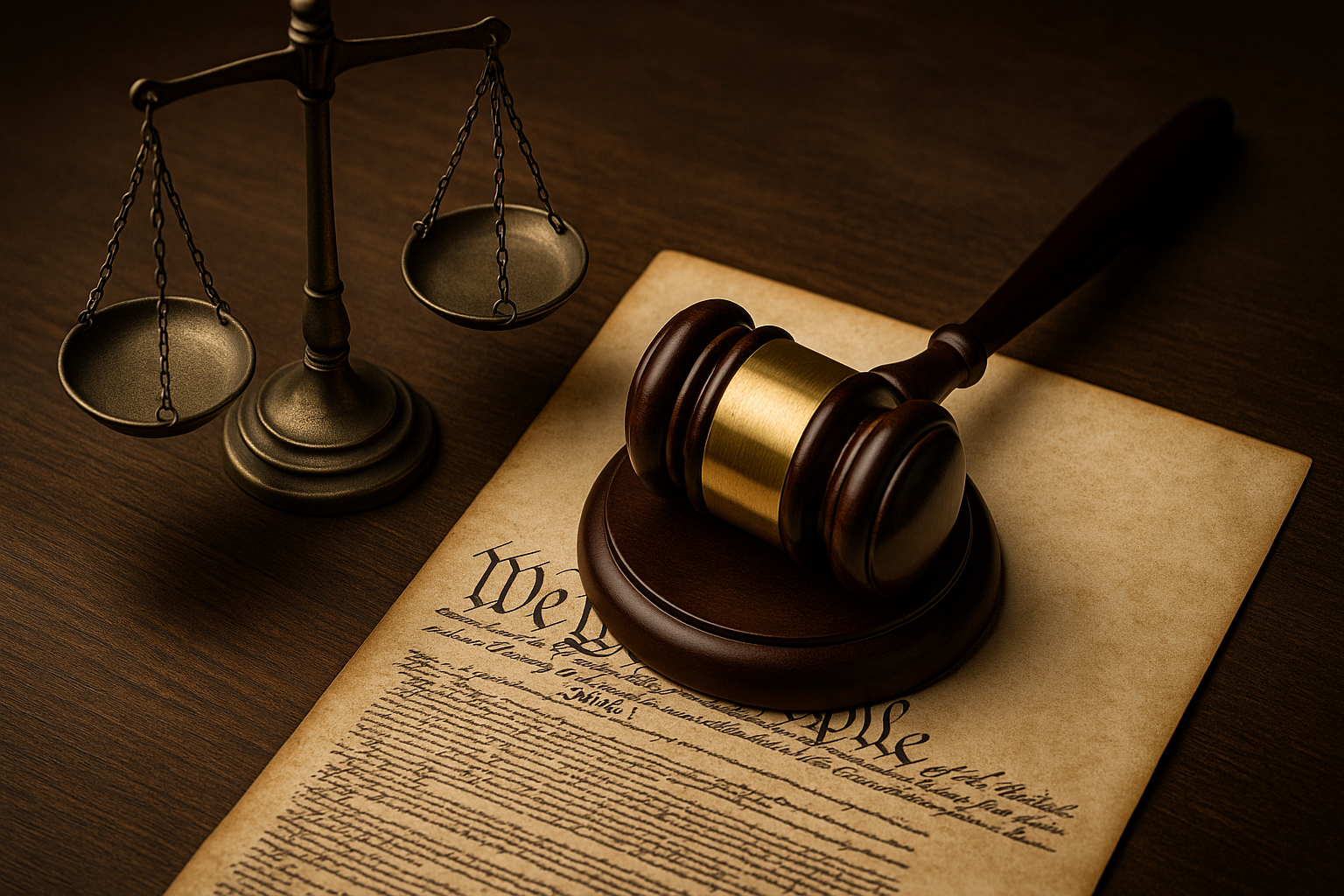
Restoring Accountability After Bureaucratic Independence
Legal scholars note the judgment continues a trend in Supreme Court reasoning that began with Seila Law v. CFPB (2020) and Collins v. Yellen (2021), both of which narrowed limits on presidential removal power.
Professor Ilan Wurman of Arizona State University told Bloomberg Law earlier this year that “the strongest indicators of the high court’s receptiveness lie in decisions weakening removal protections,” suggesting a long-building judicial shift toward restoring executive oversight.
The decision may extend far beyond the CPSC. Analysts expect new challenges to similar protections in the Federal Trade Commission, National Labor Relations Board, and other regulatory bodies.
A 2024 analysis by the Civitas Institute noted that Justice Kagan had previously criticized the Court for “effectively overruling Humphrey’s Executor with little time, scant briefing, and no argument,” reflecting wider unease among jurists about dismantling the 1935 precedent.
Implications for Governance
The ruling has reignited debate over how much independence regulators should have. Advocates for reform call it a democratic correction that strengthens accountability. Opponents fear it could destabilize technical decision-making in areas such as financial markets and consumer safety.
A report from Social Selling News warned that “the ability of any president to unilaterally remove commissioners who publicly disagree with their policy positions is likely to have a significant chilling effect on public discourse.”
Others see the change as overdue. “Presidential authority ensures accountability,” said attorney Kimberly Hermann of the Southeastern Legal Foundation. “If regulators are making law through rules and enforcement, they should answer to someone elected by the people.”
A Government Re-Aligned
The Court’s decision signals that the era of the fully independent agency may be ending. It reasserts that federal power flows from the President – and, by extension, from the electorate.
Whether ending bureaucratic independence brings greater responsiveness or greater instability remains uncertain. But after ninety years of partial independence, the unelected core of federal governance is no longer beyond reach.

