
Is it possible for a computer to trick you into thinking it's human? Back in 1950, Alan Turing kicked off an experiment that asked machines to chat in a way so natural that people might believe they were talking to a real person. This simple test, which focuses just on text, has guided developers for years and sparked plenty of debates about what real intelligence really means. Today, we take a closer look at Turing's clever challenge and see how it continues to shape our understanding of machine learning and everyday conversation.
AI Turing Test Explained: Concept, Purpose, and Relevance
Alan Turing came up with a simple game to see if a machine can think like a human. In his famous 1950 paper "Computing Machinery and Intelligence," he suggested that if about 30% of judges can’t tell a machine from a real person during a chat, then that machine shows signs of intelligence. Imagine a judge chatting with two unseen participants. If nearly one out of every three judges mistakes the machine for a human, that machine is proving it can sound very human. The setup is straightforward, relying solely on text, which has made it a go-to test for checking how well machines can mimic natural conversation.
The Turing Test sets a clear goal for testing machine intelligence. Random guesses might hit 50% accuracy, but perfect identification would be 100%. This challenge pushes developers to design programs that use everyday language, making responses feel natural and relatable. By zeroing in on the quality of the conversation rather than visual hints, the test keeps the focus on whether machines can truly imitate human thought. This is why the Turing Test still sparks lively debates about the future of machine intelligence and the art of humanlike dialogue.
Historical Origins of the AI Turing Test and Alan Turing's Legacy

In 1950, Alan Turing came up with a clever idea: a test to see if a computer could chat so naturally that you wouldn’t tell it apart from a human. He proposed that people talk with a hidden partner, one of which could be a machine. This approach moved the focus entirely to text, leaving aside any visual hints, and it set up a clear way to judge if a computer can mimic real human conversation.
Turing passed away in June 1954, but his ideas still resonate today. In 2024, people marked the 70th anniversary of his enduring legacy, sparking fresh discussions about his work. His test pushed technology beyond its limits back then, and it continues to serve as a benchmark for modern artificial intelligence research. Many experts now see his work as a key step in exploring both the power and the boundaries of digital minds.
Methodology of the AI Turing Test: The Imitation Game and Criteria
The test works through a text-only chat where a human judge interacts with two unseen partners, one is a person and the other a machine. Judges see only the typed words, so they must decide based on the conversation alone. Turing’s setup uses clear rules about how long the chat lasts and what kinds of questions can be asked, ensuring the game stays fair.
The system is simple: if a judge were guessing at random, they’d be right half the time. But if the machine mimics human talk perfectly, it could fool the judge entirely. This test is all about how naturally an AI can carry on a conversation and whether it sounds human enough.
All parts of the test are set in stone ahead of time. Details like how long the chat lasts, the style of questions, and strict instructions for the judge make sure everything stays consistent. Every exchange is watched for smooth flow, clear logic, and context, so the focus is on the quality of the conversation. This encourages AI developers to fine-tune their programs to better capture the nuances of human talk.
Modern AI Turing Test Results: GPT-4, LaMDA, and AI Art Challenges

In 2022, engineer Blake Lemoine claimed that Google's LaMDA showed hints of feelings similar to human thought. His remarks stirred up a lively debate about what truly makes a conversation human. Experts began to wonder if the old tests for talking computers truly capture the fine details of real-life chat.
Then in 2023, GPT-4 raised the bar for automated dialogue. Its answers felt more natural, with better flow and memory of earlier points in the conversation. As AI starts to handle more complex topics, developers are challenged to mimic the small quirks and subtleties of human talk. In fact, it’s getting harder for people to tell apart a chat with a human from one with a machine.
On November 20, 2024, a study took a playful turn by using art to test AI. Participants were asked to review 50 artworks, with random guessing expected to hit about 50% accuracy. Surprisingly, people only mistook AI art for human art 40% of the time. Even more intriguing, the top two admired pieces were created by AI, and 60% of the top ten works came from these automated systems. This study pushes us to rethink creativity and how we judge a machine’s art.
| AI System | Key Outcome |
|---|---|
| LaMDA | Claim of sentience spurred debate on truly humanlike dialogue |
| GPT-4 | Improved conversational flow and context retention |
| AI Art Study | 60% of top artworks were AI-generated; 40% mistake rate |
Limitations and Critiques of the AI Turing Test as an Intelligence Measure
Some say the Turing Test checks if people can be fooled rather than truly measuring a machine's intelligence. They point out that the test leans on surface-level chat tricks instead of deep reasoning. On April 2, 2025, one study tightened the conversation rules and changed the scoring system, but these tweaks still left the core issue untouched. In other words, doing well on the Turing Test might just mean a machine is good at imitating human talk, not that it actually thinks like one.
Experts also warn that a machine’s smooth dialogue can mislead judges, even if it lacks real understanding or problem-solving skills. Often, convincing simulated responses hide limits in logic and comprehension. The test relies on clever use of language rather than genuine reasoning, making it tough to tell if a machine truly "gets it." This debate continues today, as many argue that passing the Turing Test does not automatically mean a machine is truly intelligent, it might just be playing the part well.
Beyond the AI Turing Test: Alternative AI Evaluation Frameworks
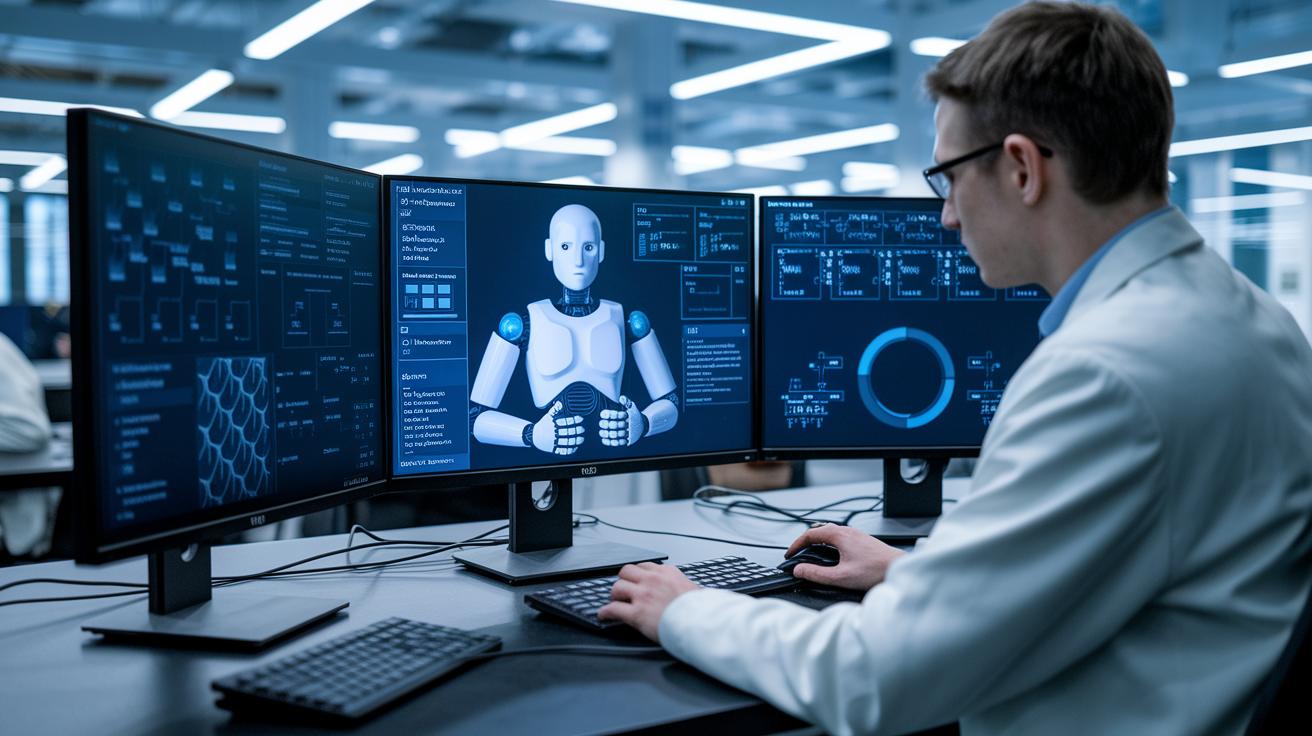
Researchers are saying that the old AI Turing Test just doesn’t cut it anymore. They point out that by focusing only on text-based mimicry, it misses out on real machine intelligence. Machines might be good at chatting like a person, yet they could lack genuine understanding.
So, experts are exploring new ways to measure AI. Modern tests now blend visual, auditory, and text inputs to create richer interactions. They even look at a machine’s problem-solving abilities in everyday scenarios. Imagine reading a story with images and sound, it gives a fuller picture of what’s really happening.
Some alternative methods dig deeper. They assess how machines learn and think beyond surface-level answers. For example, challenges like the Winograd Schema test if systems can figure out language that’s open to multiple interpretations. This isn’t about clever conversation tricks, it’s about grasping context and reasoning clearly.
Other tests focus on specific fields like science or art, ensuring that the evaluation covers a wide range of skills. These multi-angle assessments are designed to show a machine’s real capabilities. Much like checking different parts of a car to see if it runs smoothly, these tests aim to reveal true cognitive abilities.
In short, moving beyond simple dialogue tests might finally help us understand AI in all its complexity.
Final Words
in the action, our article explored the foundations and evolution of the ai turing test. We examined its origins, detailed the imitation game method, and shared modern insights on AI performance in text and art challenges.
We also reflected on the test’s limits and discussed promising alternative evaluation frameworks. The discussion points to a future where assessments are both more precise and supportive of genuine AI progress. Stay curious and positive about the advancements ahead.
FAQ
What does the Turing test determine in AI?
The Turing test determines if a machine’s conversation can mimic human dialogue, judging whether its text-based responses are indistinguishable from those of a person.
Has any AI passed the Turing test?
The claim that an AI has passed the Turing test is debated, with models like GPT-4 showing humanlike dialogue skills, though interpretations depend on testing conditions and evaluation standards.
Has ChatGPT passed the Turing test?
The question about ChatGPT passing the Turing test reflects ongoing discussions, as its conversational abilities sometimes meet humanlike criteria, yet clear, definitive passing remains subject to interpretation.
Has GPT-4 passed the Turing test?
The assertion that GPT-4 has passed the Turing test points to its advanced dialogue capabilities, but its success is measured under specific experimental conditions and remains a topic of discussion.
What are Turing test questions and examples?
The inquiry about Turing test questions and examples refers to prompts used in text-based evaluations where a judge interacts with both a human and a machine to assess if the machine’s responses are humanlike.
Is there an online version of the Turing test?
The idea of an online Turing test involves interactive platforms that let users engage with AI systems, providing a practical way to explore and assess machine conversational skills.
What is the AI art Turing test?
The concept of an AI art Turing test evaluates whether AI-generated artworks can pass as human-made, with judges assessing creative output against a defined threshold of humanlike appeal.

