
Ever thought about machines spotting a brain bleed faster than a doctor? Today, artificial intelligence is making that possibility real. Imagine a CT scan that catches a stroke in minutes or a wearable device that alerts staff when something isn’t right.
These smart tools let doctors and nurses spend more time with patients instead of filling out endless paperwork. This article looks at key AI tools speeding up both diagnosis and treatment, showing how technology is changing everyday healthcare.
Key Real-World Artificial Intelligence Examples in Healthcare
Artificial intelligence is changing the way doctors and nurses care for patients every day. With new technology coming online fast, medical teams now have tools that speed up processes and boost care quality. Here are some ways AI is making a difference:
- Medical imaging tools like Aidoc’s CT scan analysis quickly spot issues such as brain bleeds, strokes, and fractures, helping doctors tackle urgent cases first.
- Predictive patient monitoring systems, such as Current Health, use wearable devices to keep an eye on vital signs and alert health teams when something doesn’t look right.
- Personalized treatment gets a boost with systems like Tempus. By combining clinical records and genetic data, this technology helps tailor cancer therapies to each patient.
- Administrative tasks become easier with tools like Olive AI. These systems handle routine work like insurance checks and claim management, freeing up staff for more important tasks.
- AI-driven virtual care assistants, including simple chatbots, help patients book appointments, receive reminders, and access basic health information whenever they need it.
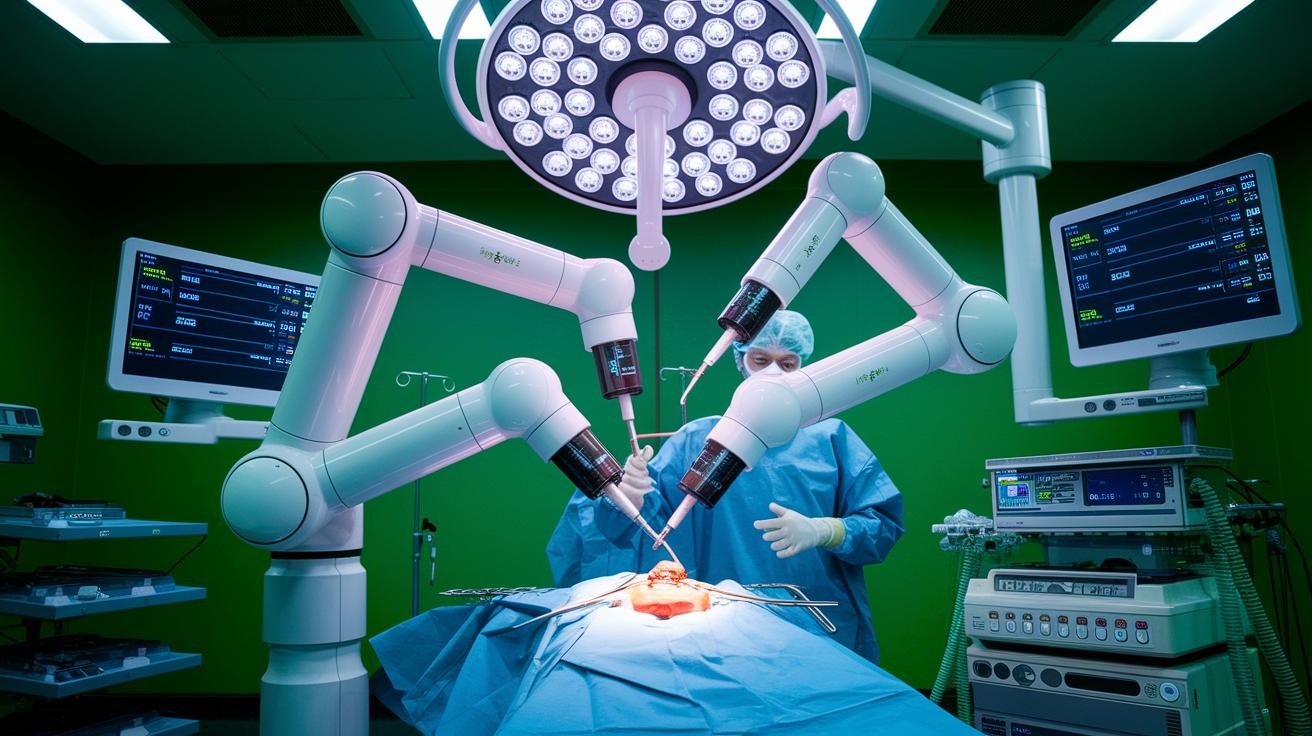
- In the operating room, robotic surgery support uses AI to provide real-time data that helps surgeons make more precise moves during procedures.
- The search for new drugs speeds up with solutions like Atomwise. Here, deep learning predicts how molecules interact and spots promising compounds much faster.
- Clinical trial matching is made simpler as AI reviews patient records to quickly find those who might benefit from participating, cutting down on waiting times.
These advancements are not only improving patient care but also making hospital operations more efficient. Don’t you find it amazing how AI tools can scan images in minutes instead of hours, radically speeding up the start of critical care?
AI-powered Medical Imaging and Diagnostics in Healthcare

AI tech is changing how doctors read and understand medical images. Tools like Aidoc scan CT images in real time and quickly pinpoint issues such as brain bleeds, strokes, and fractures. This rapid detection lets radiologists concentrate on the cases that need immediate attention.
AI imaging software uses deep learning to review X-rays and MRI scans much faster than traditional methods. Imagine a system that finds a hidden tumor in seconds, allowing doctors to plan treatment without long delays. This breakthrough speeds up spotting conditions like cancer, retinal disease, and pneumonia, cutting down wait times significantly.
These smart algorithms don't just work quickly, they're reliable too. They sift through massive amounts of data to bring forward crucial insights, sometimes catching abnormalities that might slip by during manual checks. This progress streamlines workflows and boosts patient care, ensuring that important signs aren't missed and both patients and care teams benefit from quicker, more accurate diagnoses.
AI-driven Predictive Patient Monitoring and Remote Care
Wearable devices have become crucial for tracking patients' vital signs even when they're outside hospital walls. Companies like Current Health use sensors that send live data to AI systems. These smart algorithms keep a close watch on heart rate, oxygen levels, and other important markers to spot tiny changes in health. One system even picked up a slight shift in a patient's breathing. Imagine a wearable device that sends an alert in time to adjust care when it's needed most.
This constant monitoring lets doctors and care teams jump in before problems get worse. Quick, data-driven insights mean that health issues can be managed at home, making treatment more comfortable and cost-effective. Real-time tracking is helping to build a more personalized way of caring for patients, where early signs of trouble trigger immediate action to keep you well.
Personalized Treatment and Genomic Data AI Tools

AI is changing the way we approach medicine by turning huge amounts of genetic data into clear treatment plans. Tempus pulls together medical records with detailed gene information to build cancer treatments that are as unique as each tumor. This smart method looks at both clinical data and genetic clues to spot important mutations and hidden patterns that might be missed by older techniques.
In this fresh approach, precision medicine tools predict how a patient might react to different drugs by considering their unique genetic blueprint. The system checks each gene marker to see which therapy might work best, reducing the guesswork often found in choosing treatments. Advances in genetic screening make these insights even sharper, helping doctors pick the right treatment faster and more confidently.
By using these tools, healthcare becomes more responsive and tailored to each person’s genetic makeup. Focusing on the small details of gene expression and mutations not only speeds up diagnosis but also enhances the accuracy of predicting how effective a treatment will be.
AI Automation in Clinical Support and Administrative Workflows
Olive AI is speeding up everyday routines by automating tasks like checking insurance eligibility, handling prior authorizations, and managing claims. This means staff can give more time to patients instead of getting lost in paperwork. In fact, one system now can process claims data in minutes, tasks that used to take hours.
Today’s clinical support software takes on scheduling, sends out alerts, and even matches patients with clinical trials using smart algorithms. These systems carefully scan medical records and flag key updates, much like a digital assistant reminding you of an upcoming appointment. Plus, AI tools that understand natural language help tidy up messy EHR data and sort out medical codes. The result is fewer mistakes and faster updates to patient records, keeping everything accurate and current.
When schedules are tight and patient loads are heavy, these tech-driven platforms become a real game changer. By cutting down on manual tasks, hospitals can better meet patient needs while keeping administrative work smooth and precise.

Accelerating Drug Discovery with AI-driven Analytics
Atomwise is using deep learning to look at how molecules interact by virtually screening billions of compounds. Their system models how proteins and ligands bind, letting researchers spot promising drug candidates early in the process. This technology changes the game by cutting down on long, costly lab experiments that can take years and millions of dollars. It’s like having a tool that sorts through mountains of molecular data quickly, finding potential therapies in hours instead of months.
By using smart computer methods, AI-driven drug discovery speeds up pharmaceutical research. It neatly narrows down huge chemical libraries so scientists can focus on the compounds most likely to work. The development of predictive algorithms here is key because it gives clear, data-driven insights instead of relying on guesswork. Think of it as a digital assistant that quickly evaluates complex molecular structures and predicts their reactions, helping us respond fast and affordably during health emergencies.
This method not only saves time and money in the early stages of drug development but also makes the entire research process a lot more efficient.
Integrating AI in Robotic Surgery and Clinical Decision Support
Robot-assisted surgery systems are getting a boost from AI. They use detailed surgical guidelines and imaging data to help guide each instrument during an operation. Imagine a tool that gives real-time advice based on constant checks of key metrics. For instance, one system spots tiny changes in tissue density and warns surgeons of risks before any issues arise.
AI plays a big role in clinical decision-making by quickly analyzing large amounts of data. Smart algorithms help decide the best surgical path, reducing mistakes and lowering the chance of complications during delicate procedures. Some systems even predict when instruments need adjusting, which helps ensure smoother operations and a speedier patient recovery.
These advancements not only sharpen surgical accuracy but also streamline workflows in the operating room. In doing so, AI is transforming traditional surgeries into more efficient, data-based procedures that can lead to better patient care.
Emerging AI Trends and Challenges in Healthcare Deployment

Healthcare is rapidly embracing AI, with costs that vary from about $20,000 to more than $1 million depending on what a project needs. Lately, hospitals and clinics are quick to integrate advanced AI tools that help improve patient care and simplify administrative work, all while keeping up with privacy rules like HIPAA and PIPEDA.
These AI tools are making a big difference. They speed up critical tests and treatments and offer more precise care tailored to each patient. They also boost efficiency, which can lead to savings that healthcare providers can reinvest in other areas. Personalized care is a major benefit, letting doctors adjust treatments for each patient. But there are still challenges. It can be hard to see exactly how these AI models work, and issues like biased data may affect their accuracy. Costs to integrate new systems, hurdles with regulations, and the ongoing need for staff training add extra complications.
| Benefit | Challenge |
|---|---|
| Speed | Model opacity |
| Precision | Data bias |
| Cost savings | Integration expense |
| Scalability | Regulatory hurdles |
| Personalized care | Clinician training |
Looking ahead, the challenge is to balance these promising benefits with the practical difficulties. AI must remain reliable and clear so that as it streamlines operations, it also keeps patient care safe and effective.
Final Words
In the action, we saw how AI is shaping patient care and clinical workflows. The article reviewed smart diagnostics, patient monitoring, personalized treatment, and more. Each section showed how these artificial intelligence examples in healthcare improve outcomes and ease routine tasks.
This overview reminds us that technology continues to impact every part of healthcare. The future is bright for smarter, faster, and more attentive patient care.
FAQ
What are examples of AI being used in healthcare?
The examples of AI in healthcare include real-time imaging analysis, predictive monitoring from wearables, personalized treatment plans based on genomic data, automated clinical workflows, robotic guidance during surgery, and computational drug discovery.
How are healthcare systems using AI?
The healthcare systems are using AI for diagnostic imaging, continuous patient monitoring, personalized treatment planning, data-driven decision support, workflow automation, and interactive virtual assistance to streamline operations and improve care.
What are the three AI categories in healthcare?
The three AI categories in healthcare consist of diagnostic support, predictive analytics for patient monitoring, and administrative automation, each aiming to improve decision-making and operational efficiency.
What are 10 common applications of AI in healthcare?
The ten common applications include advanced imaging analysis, predictive patient monitoring, personalized genomics, clinical workflow automation, virtual care assistants, robotic-assisted procedures, accelerated drug discovery, electronic health record management, AI-powered patient scheduling, and smart diagnostic platforms.
What benefits does AI offer in healthcare?
The benefits of AI in healthcare are faster and more accurate diagnostics, improved treatment outcomes, reduced administrative workload, cost savings, enhanced patient monitoring, and a move toward more customized patient care.
What resources are available for AI in healthcare research presentations and projects?
The resources available include detailed PDFs and research papers that explain AI applications, as well as presentations and project outlines showcasing real-life deployments like Aidoc in imaging, Tempus in genomics, and Olive AI for workflow automation.
What is a real-world application of AI in healthcare?
A real-world application of AI in healthcare is seen in platforms that analyze CT scans for critical findings and in wearable sensor systems that continuously track patient vital signs to trigger early interventions.
What does the future of AI in healthcare look like?
The future of AI in healthcare points to more integrated diagnostic tools, personalized treatment strategies, smarter remote monitoring, and automated clinical processes, all contributing to better patient care and improved operational efficiency.

