
Have you ever wondered if the stock market is more than just luck? Many investors say that digging into company details and keeping an eye on market moods can reveal real clues.
By blending company finances with trend charts and smart computer tools, experts can uncover patterns hidden in old numbers. It’s a bit like piecing together a puzzle where every piece hints at potential growth.
In this post, we explore practical insights and easy-to-use data tools designed to help sharpen predictions and back bold ideas for future growth.
predict stock market trends: Bold Models for Growth
Fundamental analysis examines a company’s financial health by looking at familiar ratios like price-to-earnings and debt-to-equity. It also considers big-picture economic data and how a whole sector is doing. For example, using a tool like WallStreetZen, investors can figure out a company’s true value. Last year, this approach helped stocks rated as "Buy" nearly double the S&P 500, showing its strong track record.
On the other side, technical analysis dives into price patterns and market mood. Think of tools like TradingView that help traders see signals from chart patterns and indicators. In this method, the market behaves like a voting machine: investor emotions can quickly move prices up or down. By combining data analytics with statistical methods, experts create forecasts that are more precise.
- Fundamental analysis
- Technical chart patterns
- Statistical regression models
- Machine learning algorithms
- Real-time sentiment analytics
By mixing these techniques, investors create a robust framework. First, fundamental insights give a steady basis for judging a company’s long-term promise. Then, technical analysis provides hints about the right timing for trades. Statistical models shine a light on trends hidden in past data, while machine learning sorts through vast amounts of information to spot new patterns. Real-time sentiment analytics keep track of immediate reactions in the market. Together, these methods offer a balanced strategy that taps into both traditional financial measures and modern data science.
Technical Analysis Techniques to Predict Stock Market Trends
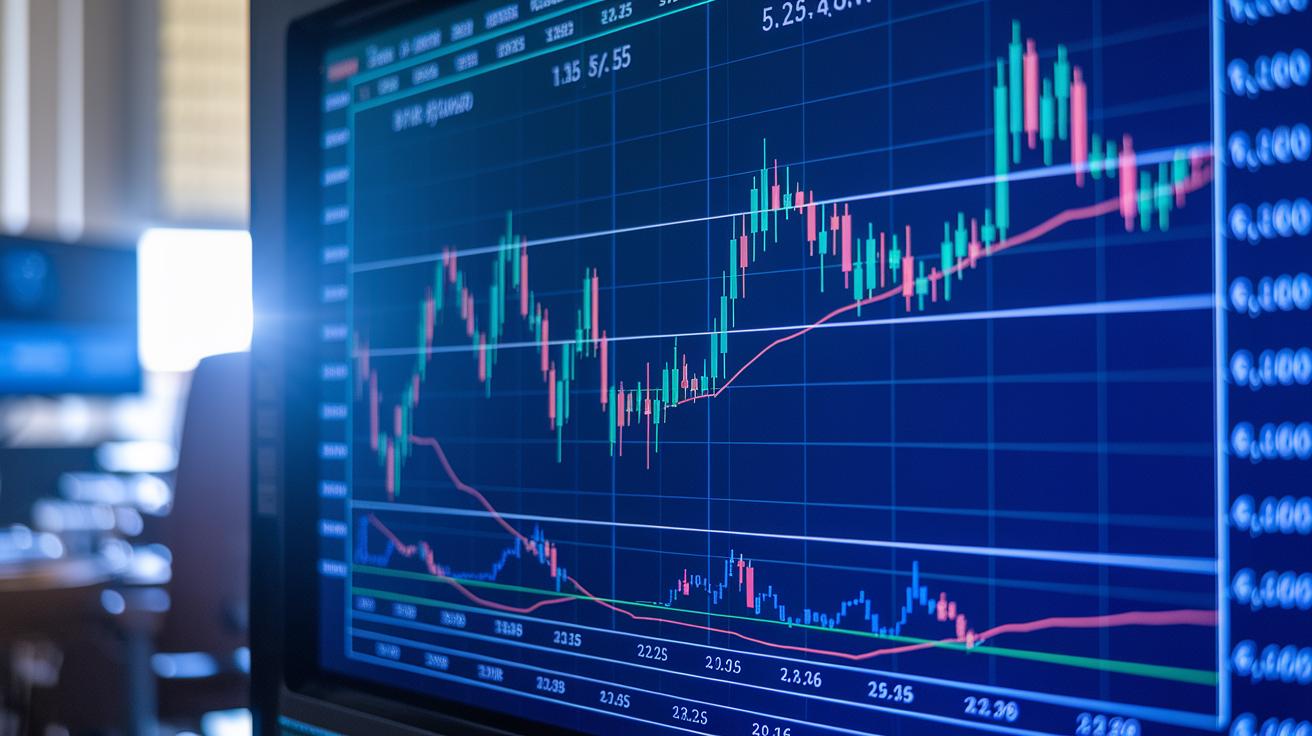
Indicators act as handy tools to understand price movements. They help investors spot trends and gauge market conditions by smoothing out the numbers. For example, moving averages can alert traders to early shifts before strong momentum builds.
Chart patterns are a key part of technical analysis too. Familiar shapes, like head and shoulders or triangles, often point to changes in investor mood. These patterns repeat over time, which makes them useful for predicting future moves. A triangle pattern, for instance, might signal a gradual breakout when price volatility goes up.
Platforms like TradingView offer an interactive way to apply these tools. They let you overlay different indicators on live charts and customize your view of price dynamics. This hands-on approach shows how technology can fine-tune your investment strategy.
| Indicator | Typical Use | Signal Interpretation |
|---|---|---|
| Simple and Exponential Moving Averages | Smooth price data | Trend direction and reversals |
| Bollinger Bands | Measure market volatility | Overbought or oversold conditions |
| Relative Strength Index (RSI) | Evaluate momentum | Potential reversal points |
| Moving Average Convergence Divergence (MACD) | Identify trend changes | Signal crossovers and divergences |
| Head and Shoulders Patterns | Spot reversal signals | Trend weakening and reversal |
| Triangle (Ascending/Descending) Patterns | Assess consolidation | Breakout directions |
Using several indicators together gives you a fuller picture of the market. It’s smart to cross-check signals from different tools before making a trade. For example, when a moving average crossover lines up with a strong RSI and a clear chart pattern, it boosts confidence in your decision. This combined approach helps balance technical signals with the overall market context, lowering the risk of misreading a single data point.
Integrating Fundamental Analysis in Predict Stock Market Trends
Investors often check key ratios like price-to-earnings, PEG, and debt-to-equity to get a quick look at a company’s financial health. Think of these numbers as snapshots that help reveal a hidden gem, just like finding a bargain at a local market. They let investors compare companies and spot if a stock is priced lower than its earnings and growth potential warrant.
Next, digging into earnings reports, revenue growth, and broader economic data brings more clarity about a company’s performance. Reviewing quarterly results and forecasts helps investors see shifts in profit and market standing. For example, a strong quarterly report paired with rising revenue might signal a real turning point in how a company is doing.
By merging these fundamental scores with trend models, investors can build clearer forecasts for future returns. Detailed data analytics let them layer intrinsic value over short-term price patterns. This approach gives a more complete picture of potential market moves, setting it apart from methods that rely solely on technical analysis.
Keeping financial information updated is key. Investors who track real-time data can quickly adjust their forecasts when market conditions change.
AI and Machine Learning Models to Predict Stock Market Trends
AI is changing the way we predict stock markets. By analyzing large amounts of data, machine learning models can pinpoint patterns that offer a new level of precision in forecasting stock movements.
Neural Network Predictors
Neural networks bring unique methods to market prediction. Some models, like feedforward networks, process data in one quick pass, while recurrent networks take a second look at past information. For example, Long Short-Term Memory networks zero in on time-based patterns, helping traders detect trends that build up gradually. This use of past data to predict future actions makes these models great at spotting small shifts in momentum and volatility.
Regression Models for Forecasting
Regression models, whether they use simple straight-line methods or more complex techniques, add a scientific touch to trend prediction. They work by linking market indicators to create predictions based on both historical performance and current data. By carefully selecting which market variables to include, these models can measure how different factors affect stock performance. Techniques like cross-validation and regularization are essential here, they help avoid overfitting and ensure the models stay accurate with new data instead of reacting to random noise.
When it comes to using these AI and machine learning models, attention to detail is key. Build your models with careful feature engineering, train them thoroughly, and validate them against historical data. By fine-tuning input variables to highlight predictive signals and adjusting parameters based on past trends, you get a forecasting tool that provides reliable insights. This balanced approach builds trust in the forecasts and ensures the strategy remains effective in various market conditions.
Algorithmic Trading and Backtesting for Stock Market Trend Predictions
Algorithmic trading systems rely on smart software and flexible APIs to carry out trades automatically based on set rules. This means traders can react in real time to market signals, cutting out the delays that come with manual trading.
Backtesting is a critical part of the process. In a good backtesting setup, traders gather historical market data from reliable sources that reflect different market conditions. They then simulate trades using their chosen strategies and evaluate each one with key metrics like return on investment, trade frequency, and win-loss ratios. Testing various past scenarios helps reveal how a strategy might perform so traders can adjust parameters and boost its predictive power. In short, solid backtesting helps traders see what works and what might need fixing.
When reviewing backtest results, focus on risk-adjusted returns and stay alert for signs of overfitting. Look at how performance measures up against market volatility to catch hints of real-world potential. Consistent outcomes across different time periods are a good sign that the algorithm isn’t just tuned for old data. A careful and detailed analysis, including simple statistical checks, can uncover inconsistencies and ensure the strategy captures the true complexity of the market.
Moving from backtesting to live trading usually starts with paper trading. This risk-free practice phase lets you test and tweak your strategy without risking real money. By gradually building up confidence through paper trading, you can minimize risk and be more sure of your automated trading setup when you go live.
Risk Management and Volatility Forecasting to Predict Stock Market Trends
Predicting and handling market ups and downs is essential for keeping your investments safe. Traders lean on volatility forecasts and stop-loss levels to shield themselves from sudden price swings when market moods change fast.
Time-series models give us clear numbers to understand risk. Investors use tools like Value at Risk (VaR), standard deviation, and checks for volatility patterns. In simple terms, these models turn past price moves into hints for what might come next.
Traders also practice scenario analysis, run stress tests, and carefully size their positions. They explore different market outcomes to see how major shifts could affect their portfolios. Stress tests show the impact of unexpected events, while managing position sizes helps prevent one loss from hurting the overall capital.
Mixing these risk forecasts into portfolio choices is key for a balanced strategy. By shifting asset allocations based on predicted risks, investors not only cut potential losses but also set themselves up for steady, long-term growth.
Real-Time Sentiment Analysis and Market Monitoring to Predict Stock Market Trends
Traders now pull sentiment data by scanning news feeds, checking social media posts, and browsing financial forums. This mix gives them a quick look at the public mood.
Advanced systems work nonstop to process these data streams using natural language processing. They break down words and phrases in real time, match them with price movements, and assign sentiment scores. This helps traders see instant reactions from the market. Sometimes, a sudden change in sentiment even hints at a quick shift in prices, almost like the market is taking a vote.
Special dashboards and alert tools keep an eye on indicators like momentum and volume spikes. They turn large amounts of data into clear visual signals, showing patterns that might get lost in the noise. Traders rely on these live updates to tweak their strategies during wild market swings.
By mixing sentiment signals with tried-and-true technical indicators, traders get a clearer overall picture. This combination helps balance real-time mood swings with reliable data trends.
Final Words
In the action, this article reviewed a range of forecasting methods, from fundamental and technical analysis to advanced AI models and real-time sentiment approaches. It showed how blending quantitative tools with risk controls and backtesting creates a clear, powerful framework.
With these insights, readers can predict stock market trends while gaining a dependable view of market shifts. The discussion leaves us feeling positive about the ability to make informed decisions in business and personal arenas.
FAQ
How can I predict stock market trends in 2025?
Predicting stock market trends in 2025 involves blending data analytics with both fundamental and technical studies. Investors review historical performance, economic indicators, and company fundamentals to make informed assumptions.
What is a stock price prediction formula?
A stock price prediction formula typically combines historical price data, technical indicators, and statistical models. Experts may incorporate regression techniques or machine learning to estimate future price movements accurately.
How does a stock market prediction algorithm work?
A stock market prediction algorithm processes historical performance, technical signals, and sentiment data using mathematical and statistical models. It employs methods like regression analysis or machine learning to forecast possible market behavior.
How can one forecast the stock market for the next five years?
Forecasting the stock market for the next five years relies on both fundamental and technical studies. Long-term trends consider company financial health, economic conditions, and emerging market patterns for future guidance.
What features does a stock price prediction website offer?
A stock price prediction website aggregates data from technical indicators, company fundamentals, and sometimes AI-driven analyses. Users receive insights into potential trends, current market conditions, and price forecasts from multiple data sources.
How is machine learning used for stock price prediction?
Using machine learning for stock price prediction means training algorithms on historical data to spot subtle trends. Techniques like neural networks and regression models help identify patterns that suggest future price changes.
How is a six-month stock market forecast performed?
A six-month stock market forecast blends short-term technical indicators with key economic and company-specific events. Analysts closely track recent price movements, earnings releases, and market sentiment to project near-term trends.
How is the Indian stock market predicted for next week?
Predicting next week’s trend in the Indian stock market involves analyzing regional economic data, technical signals, and investor sentiment. Similar methods used in broader markets apply here with additional focus on local conditions.
How do investors generally predict stock market trends?
Investors predict stock market trends by combining fundamental analysis, which reviews earnings and economic indicators, with technical analysis that examines historical price patterns and indicators for a balanced approach.
What do the 3 5 7 rule and the 7% rule in stocks mean?
The 3 5 7 and 7% rules in stocks are guideline principles that traders use to gauge market behavior and manage risk. They serve as benchmarks for evaluating price trends and deciding on position sizes.
Should I pull my money out of the stock market in 2025?
Deciding to exit the market in 2025 depends on your personal risk tolerance, market outlook, and financial goals. Experts often advise reviewing a diversified portfolio strategy rather than a complete exit.

