
How can a simple circuit change the way machines learn? An artificial neuron works a lot like a tiny brain cell. It uses basic math to turn numbers into smart decisions.
Early pioneers got these units started, and today they form the core of many AI systems. Each adjustable input lets these neurons turn raw data into useful insights.
This article shows how even the smallest components are driving innovation in machine learning, making technology smarter and more efficient every day.
Fundamentals of the Artificial Neuron in Neural Networks
The artificial neuron is the basic building block in neural networks. It takes in signals from the outside, multiplies each input by a specific weight, adds them all up (plus a bias if needed), and then uses an activation function to produce its output. Early thinkers in 1943 laid the groundwork by using basic logic to mimic how real neurons work. Imagine a time when simple circuits, inspired by our own brain cells, could turn signals like light and sound into information.
Each artificial neuron works much like a biological one. It combines and adjusts its inputs before applying a non-linear function, which helps the system learn complex patterns from data. This setup connects raw numbers to real outcomes, forming the core strategy behind many AI applications today. Think of it as similar to how our eyes take in pixel values and convert them into the images we see. This simplicity is what lets large neural networks grow into sophisticated systems that can recognize images, understand language, and much more.
Architecture and Mathematical Model of Artificial Neurons

Artificial neurons are built to work a lot like simple brain cells using an easy-to-understand math formula. First, each input (x₁ through xₙ) is paired with a weight (w₁ through wₙ) to decide how strong the signal is. Then, all these products are added together. A bias, labeled b, is mixed in with the sum to shift the result so the neuron can be active under different conditions. Next, a transfer function called φ changes this adjusted total into an output. This step is key to deciding if the signal is strong enough to “fire” the neuron. Back in 2005, researchers set down clear formulas for these functions, which have helped shape today's neural network designs.
To break down the process:
- Each input value gets multiplied by its matching weight, showing how the signals are weighted.
- All these weighted numbers are added together to create a single overall input.
- A bias is then added to this total to fine-tune the result.
- The transfer function φ takes over next, turning the sum into an output that tells us how the neuron reacts.
- Finally, this output is checked against a threshold to see if the neuron should activate.
These steps lay out the heart of artificial neuron technology. In building large networks, designers might use direct addition or matrix multiplication to speed things up. In simple terms, multiplying, summing, adjusting with a bias, and then using a non-linear transfer all work together to power modern machine learning.
Activation Functions and Nonlinear Dynamics in Artificial Neurons
Activation functions are like the engines in a neural network, helping it learn complex patterns. They add a bit of nonlinearity that turns the weighted sum of inputs into a useful output. For example, even a basic function like the step activation can mimic a digital spike, making a neuron fire only when a threshold is reached.
There are several common activation functions, such as sigmoid, tanh, and ReLU. The sigmoid function squeezes values between 0 and 1, giving a smooth gradient that helps the network learn. Tanh, on the other hand, outputs values between -1 and 1, which can be useful when you need both positive and negative signals. ReLU sets any negative values to zero, making computation faster and helping to avoid problems like vanishing gradients. This mix of functions lets each neuron respond differently based on how strong the inputs are.
Transfer dynamics look at how the total input passes specific thresholds to trigger a response. In studies of circuit activation, these thresholds decide if the combined signals lead to an excitatory or inhibitory result. This process, managed by the activation function φ, works a bit like a switch in a digital circuit. It makes sure that only strong enough signals get through to influence the network’s decisions.
Comparing Biological Neurons and Artificial Neurons
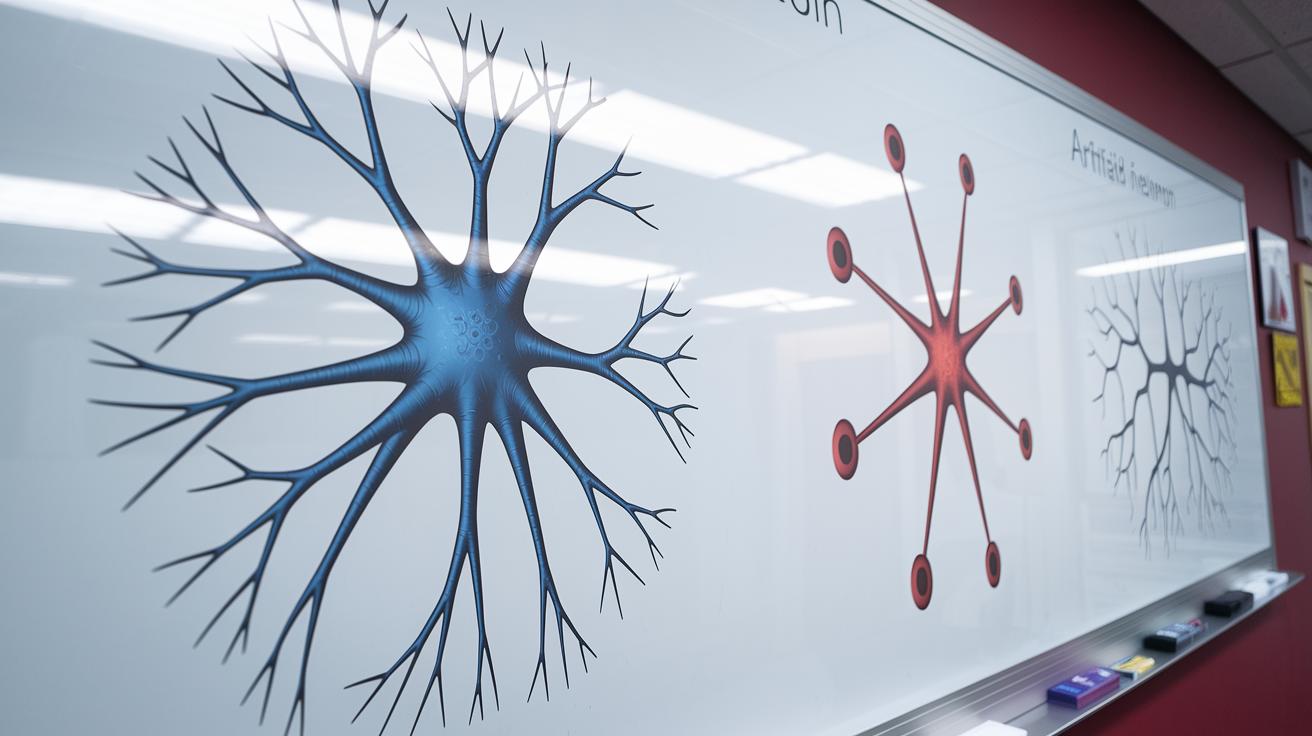
Biological neurons have a clear structure. They feature a cell body that gathers and processes signals, an axon that sends the signal forward, and synaptic terminals that pass the information to other neurons. Artificial neurons borrow these ideas by mimicking each part of the natural system. Weighted inputs in an artificial neuron work much like dendrites that collect signals, while summing these inputs with an added bias is like the cell body integrating information. The activation function then plays a role similar to an axon, deciding whether the neuron fires. Just as a natural neuron only sends out a signal when a certain threshold is reached, like a light turning on when the switch is flipped, artificial neurons use thresholds to decide when to pass information on.
This similarity shows up in how both systems fine-tune their responses. In our brains, synaptic strength is adjusted to balance incoming signals. In neural networks, synaptic weight calibration works in the same way. Think of it like tuning the volume on your radio until the sound is just right. In both biological and artificial systems, these methods are vital for recognizing patterns accurately and handling tasks that range from simple decisions to complex machine learning challenges.
Implementation Strategies: Summation vs. Matrix Multiplication
Direct summation calculates a neuron's net input by carefully going through each input, multiplying each one by its corresponding weight, and then adding them all up. It’s a clear, step-by-step approach that mirrors how a basic digital circuit works. This method is easy to code with simple loops and works well for smaller datasets or simpler networks, even though it might not be the fastest option for larger tasks.
Matrix multiplication, however, uses linear algebra tools to multiply whole weight matrices by input vectors in one smooth operation. This approach shines with large amounts of data and complex networks, especially when paired with specialized hardware like GPUs or TPUs. It speeds up the process and helps maintain simulation accuracy, making it a favorite for large-scale neural network simulations.
| Method | Key Benefit |
|---|---|
| Summation | Simple, step-by-step calculation |
| Matrix Multiplication | Faster processing and better scalability |
Learning Mechanisms: Weight Calibration and Backpropagation
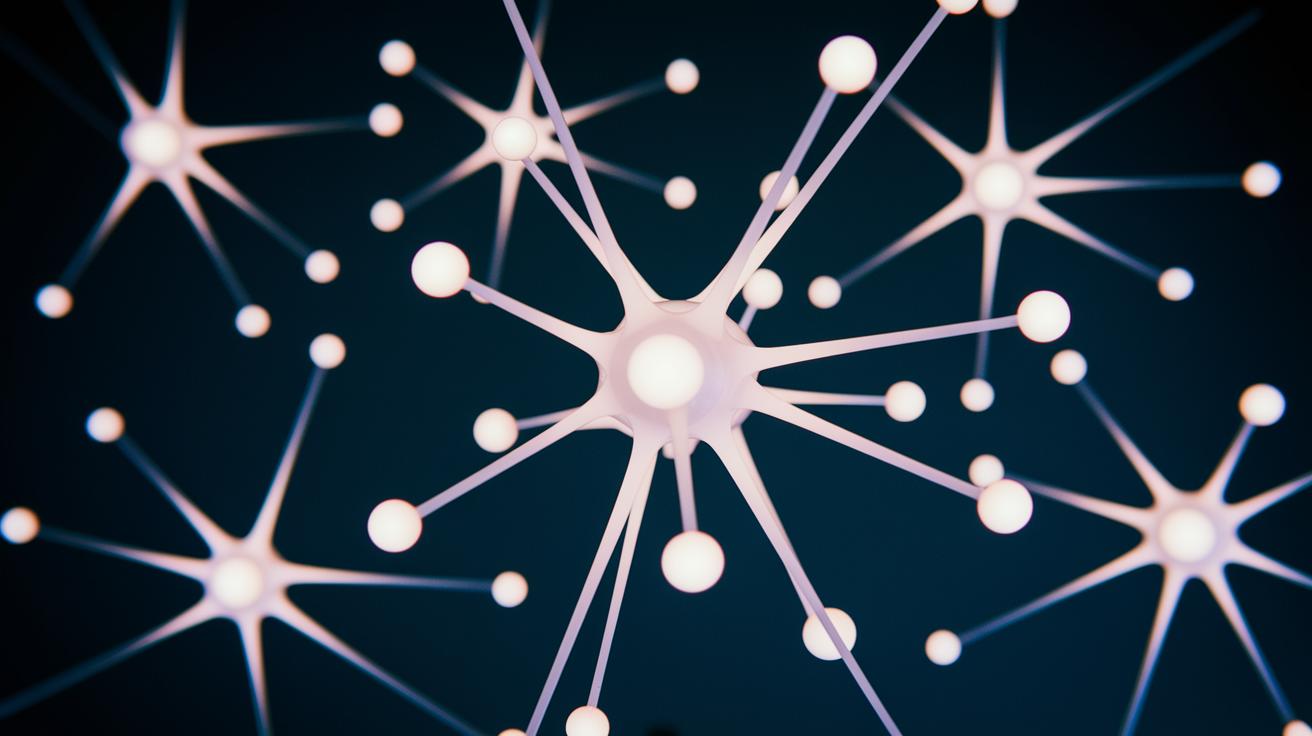
Artificial neurons learn much like we adjust settings on a sound mixer. At the very start, the system compares what it predicts with what it should produce. It then figures out how far off it was by calculating the error. In simple terms, the network measures each connection's contribution to that error by working out gradients. With these insights, it makes small changes using a method called gradient descent, steadily tuning each connection until the overall output is as close to perfect as possible.
The learning process relies on well-tested algorithm prototypes that guide this fine-tuning. First, data flows through the network in a single direction, which is like following a clear path. Then, based on the error, the system makes adjustments one step at a time. Each round builds on the last, gradually improving the network’s accuracy, much like practicing a skill over and over until you get it just right. At the beginning, adjustments might be broad and noticeable, but as the network learns, the changes become smaller and more precise.
Another smart aspect of this process is adaptive weight tuning. Simply put, the network can alter how quickly it learns by adjusting the learning rate on the fly. This flexibility helps it respond to shifting error levels without overshooting the mark or stalling. These combined techniques enable the network to make sense of complex data, reduce errors systematically, and perform reliably in a variety of tasks, laying the groundwork for innovative advancements in artificial intelligence.
Artificial Neuron: Powering Machine Learning Innovation
At the heart of many modern AI systems lie artificial neurons. These tiny building blocks help computers learn and make sense of data. For instance, Convolutional Neural Networks work like layers of filters to break down images into simple details such as edges and textures. And when handling things that come in a sequence, like language or time-based data, Recurrent Neural Networks step in with the same basic idea.
Each artificial neuron acts like a little pattern detector. It picks out important features, turning raw input into useful insights. Imagine a system that gradually builds its understanding, step by step, by recognizing everyday patterns. That’s what makes these neurons so crucial to the advances in machine learning.
In real-world applications, these neurons are the engine behind adaptive learning systems. They adjust their settings constantly to keep up with changes in real-time data. Whether it’s improving speech recognition, spotting irregularities, or processing natural language, this adaptability boosts accuracy over time. And because every neuron contributes to the larger network, they help power everything from smart assistants to advanced predictive tools. This constant evolution is a big part of why AI keeps getting smarter and more reliable.
Final Words
In the action, our exploration traced the basics of neural networks, from the mathematical model and activation dynamics to comparisons with biological cells. The article outlined how each component builds on simple principles, allowing an artificial neuron to drive sophisticated tasks in AI and machine learning. We followed the evolution from digital computing cell operations to learning strategies that fine-tune performance. The narrative leaves a hopeful note on how these smart systems continue to shape our daily lives and business decisions.
FAQ
What is the artificial neuron model?
The artificial neuron model acts as the core unit in neural networks. It takes inputs, multiplies them by weights, sums the total with a bias term, and applies an activation function to produce an output.
How are artificial neurons used in AI?
Artificial neurons serve as building blocks in AI by processing and transmitting signals. They combine in layers to form networks that recognize patterns and make decisions based on input data.
What does an artificial neuron diagram look like?
An artificial neuron diagram shows nodes for inputs and outputs, with lines representing weighted connections. It illustrates the process of multiplying inputs by weights, adding a bias, and applying an activation function.
How does an artificial neuron differ from a perceptron?
While both use weighted inputs and a threshold, an artificial neuron can implement various activation functions. This flexibility allows it to model more complex patterns than a perceptron’s basic binary decision.
What are artificial neurons made of?
Artificial neurons are made of inputs, weights, a bias term, and an activation function. Together, these components compute a weighted sum of the inputs, adjusted by the bias, then shaped by the activation function.
How do artificial neurons compare to biological neurons?
Artificial neurons mimic biological neurons by processing signals through weighted inputs and an activation step. Unlike biological neurons, they operate using mathematical functions rather than chemical and electrical processes.
What is an artificial neural network?
An artificial neural network is a system built from interconnected artificial neurons. It processes information through multiple layers, enabling tasks like image recognition, language processing, and decision-making.
What is the formula for an artificial neuron?
The formula multiplies each input by its corresponding weight, sums these products with a bias, and then applies an activation function. This yields the neuron’s final output.
What is an artificial neuron?
An artificial neuron is the basic computational unit in neural networks. It processes data by summing weighted inputs and applying an activation function to determine the output signal.
Are artificial neurons possible?
Yes, artificial neurons are widely implemented in machine learning and AI systems. They simulate key aspects of biological signal processing and form the foundation of modern neural network architectures.
Who invented artificial neurons?
The concept of artificial neurons emerged from research in the 1940s. Early theoretical work that modeled neural events laid the groundwork for the development of artificial neurons used in neural networks today.

