
Imagine that a simple mechanical pigeon built in 400 BCE could pave the way for the kind of artificial intelligence we see today. This timeline shows how early machines set the stage for major breakthroughs in technology and thought. Think about how ideas from figures like Alan Turing and early robotics experiments sparked a change that still influences our lives. In this story, we follow the evolution of artificial intelligence, revealing how centuries of clever ideas have led to the fascinating tech we experience every day.
Key Milestones and Evolution of Artificial Intelligence
Artificial intelligence has come a long way. It began with early mechanical devices and has grown into the high-tech systems that touch our daily lives. Think back to a simple mechanical pigeon around 400 BCE, this early spark set the stage for ideas that would eventually change the world. Over time, researchers explored new theories and crafted machines through hands-on experiments and big technological leaps.
The journey really took off in the mid-20th century. In 1950, Alan Turing shared ideas that paved the way for future innovation, and the Dartmouth workshop in 1956 officially kicked off AI research. Soon after, exciting developments followed: Frank Rosenblatt introduced the perceptron in 1957, which brought the idea of pattern recognition with neural networks, and Unimate, the industrial robot, made its debut in 1961, starting a new era of automation. Shakey the Robot, developed in the late 1960s, used sensors to navigate and solve basic problems, adding a practical edge to the theory. Even during times when interest dipped, renewed efforts led to fresh breakthroughs that laid the groundwork for today’s digital innovations.
| Year | Milestone | Impact |
|---|---|---|
| 400 BCE | Mechanical Pigeon | Early spark of machine-based mimicry |
| 1956 | Dartmouth Workshop | Coined the term “artificial intelligence” and launched research |
| 1957 | Perceptron | Introduced neural network pattern recognition |
| 1961 | Unimate Industrial Robot | Began automation in manufacturing |
| 1966-72 | Shakey the Robot | Integrated sensor-based navigation and basic problem-solving |
| Mid-1970s | AI Winter | Marked by reduced optimism and funding cuts |
| 1986 | Self-Driving Mercedes | Pioneered autonomous vehicle exploration |
| 1997 | Deep Blue vs. Kasparov | Showcased machine expertise in competitive chess |
| 2011 | Watson & Virtual Assistants | Highlighted decision-making and everyday tech integration |
| 2023 | GPT-4 & Bard | Raised the bar in generative AI and interactive models |
Each of these milestones marks a step from simple beginnings to the truly advanced systems we see today. AI is now woven into our everyday tech, influencing sectors from healthcare to communications, and even inspiring new paths in business and research. Isn’t it fascinating how far we’ve come?
Origins of Artificial Intelligence: From Ancient Devices to Turing’s Blueprint
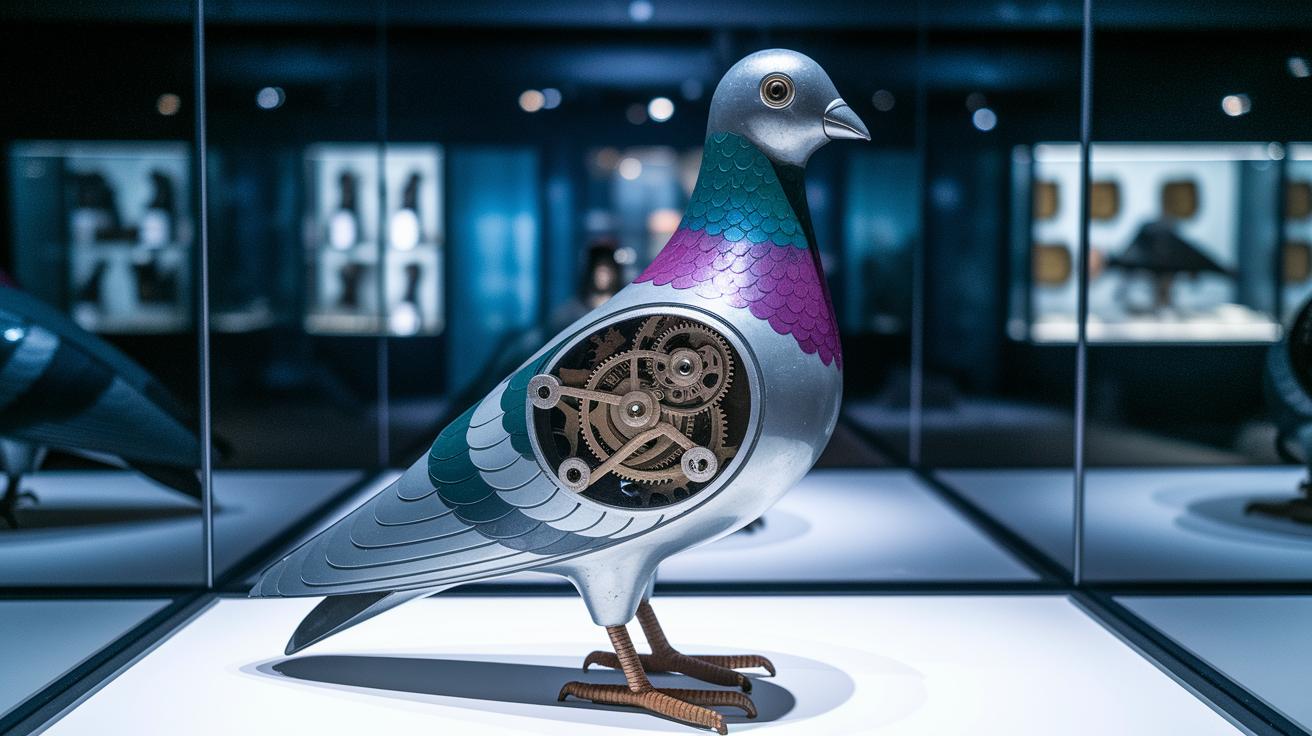
Ancient machines, like the mechanical pigeon from around 400 BCE, offered an early glimpse into how devices might mimic life. Early inventors crafted simple gadgets that imitated natural actions and, in doing so, sparked debates about what it means to replicate intelligent behavior.
By the mid-20th century, human "computers" were crunching numbers for complex projects. Their work exposed key technical hurdles in early AI trials. Alan Turing’s 1950 paper, Computing Machinery and Intelligence, pushed us to wonder how far machines could go in learning and adapting. His ideas reshaped our view of smart technology and set a course for modern AI.
In 1956, experts from different fields met at the Dartmouth workshop. They didn’t just define AI as a study; they blended ideas from various disciplines to fuel breakthrough innovations. This gathering encouraged deep thinking about machine intelligence and linked early experiments to the adaptive systems we see today. It laid a solid foundation for the evolving journey of artificial intelligence.
Foundations of Modern AI: 1950s and 1960s Breakthroughs
After the Dartmouth workshop introduced the term "artificial intelligence" in 1956, research in this field took off. Researchers started blending theory with practice, creating early systems that could mimic human thinking. This early period paved the way for the exciting advancements that define AI today.
- Dartmouth (1956): The event that set the stage for AI as a formal field.
- Perceptron (1957): Laid the groundwork for pattern recognition using neural networks.
- ELIZA (1966): Brought us the first chatbot that could simulate conversation.
- Shakey the Robot (1966-72): Combined sensor technology with problem-solving, pointing toward modern robotics.
Frank Rosenblatt's perceptron, introduced in 1957, was one of the first systems to identify patterns using an artificial neural network. This breakthrough sparked further exploration into learning machines and algorithms that work in ways similar to the human brain. Similarly, ELIZA, created by Joseph Weizenbaum in 1966, gave us a taste of natural language processing by imitating human conversation. It left many both entertained and thoughtful about the future of human-computer interactions.
Shakey the Robot, developed between 1966 and 1972, pushed the limits of what robots could do by combining sensors with early decision-making capabilities. This blend of navigation and practical problem-solving was a major step toward the AI we see today. Each of these milestones built the foundation for modern AI, inspiring the innovative technologies that continue to shape our world.
The Rise of Expert Systems and the AI Winter: 1970s-1980s

Back in the mid-1970s, a review by Sir James Lighthill in 1974 revealed that the bold promises of AI were falling far short of actual results. This discovery led to a sharp cut in funding, and many projects were forced to hit pause as the field failed to meet its lofty goals.
This tough period, often called the AI Winter, made many researchers wonder if AI could really deliver. With investments and support drying up, the community had to step back and rethink its plans.
Then, in the early 1980s, there was a cautious comeback. Expert systems, driven by Edward Feigenbaum's work, began showing they could make a real impact in the business world. Alongside this, early deep-learning approaches from pioneers like John Hopfield and David Rumelhart mixed rule-based thinking with neural networks, hinting at ways to overcome previous barriers. These innovations slowly rebuilt faith in AI.
At the same time, Japan's Fifth Generation Computer Project injected roughly $850 million into AI research. This major investment aimed to boost machine intelligence using rule-based techniques. It not only sparked new breakthroughs but also laid the foundation for the modern surge of AI advancements we witness today.
Machine Learning and Deep Learning Revolution: 1990s-2010s
Back in the 1990s, researchers shifted their focus from pure theory to using real-world data. Early experiments with neural networks showed that computers could start to learn by spotting patterns, much like a child noticing the details of their surroundings.
Then the next decade brought big breakthroughs. In 1997, IBM’s Deep Blue amazed everyone by defeating a chess champion, proving that computers using rule-based methods could go head-to-head with human strategy. Soon after, tools like Dragon Systems’ speech recognition began to make talking with computers feel more natural. And in 2002, the release of the Roomba brought smart, sensor-driven robotics right into our homes, handling everyday tasks with ease.
Advances didn’t stop there. In 2004, the Spirit and Opportunity rovers set off to explore Mars, showing that intelligent machines could brave even the harshest, most unpredictable environments. Then in 2010, Kinect’s technology turned our movements into commands, reshaping the world of gaming. By 2011, IBM Watson’s Jeopardy win, along with the launches of Apple’s Siri and later Amazon Alexa, made conversational AI a part of daily life. Geoffrey Hinton’s breakthrough with ImageNet in 2012 pushed deep learning forward, laying a strong foundation for the AI we see everywhere today.
Generative AI and Contemporary Innovations: 2010s to Today

In recent years, generative AI has exploded onto the scene, changing the way machines create and interact with content. Researchers have gone beyond just crunching numbers to now producing fresh, creative material, everything from lifelike images to text that sounds remarkably human. Imagine a time when AI could only repeat what it learned; today, it writes poetry and crafts artwork that leaves experts in awe.
Big breakthroughs really pushed this field forward. In 2020, OpenAI’s GPT-3 amazed everyone by understanding and generating text with great fluency, setting a high bar for language models. Then in 2021, the DALL-E model took the stage by turning words into detailed images, powered by 12 billion parameters. By 2022, ChatGPT captured the public’s imagination with its ability to carry on a natural conversation. Each of these milestones built on earlier ideas, fine-tuning the nuance and scale of what AI can do.
The influence of these innovations quickly spread across major platforms. Microsoft added ChatGPT to Bing, and in 2023, Google introduced Bard to join the conversation. Later that same year, OpenAI’s GPT-4 raised the bar once again with even more refined and context-aware responses. These aren’t just small step-ups, they signal a shift toward AI that collaborates with human ingenuity. Ultimately, this progress points to a future where technology and creativity work hand in hand, reshaping our everyday lives.
Legacy of Pioneering Innovators in the History of AI
Alan Turing laid the groundwork for modern computing and our understanding of intelligence. His ideas sparked a fresh wave of innovation, influencing how we view what machines can do. John McCarthy, the man who coined the term “artificial intelligence” in 1956, brought together experts from different fields to work as one team. His vision made teamwork and sharing ideas a lasting part of AI's evolution.
Frank Rosenblatt pushed the field forward in 1957 with his invention of the Perceptron, one of the very first models that mimicked how our brains recognize patterns. His breakthrough opened up lots of new ways for computers to learn from data. Edward Feigenbaum built on this momentum by creating expert systems that used simple rules to tackle tough problems, showing us that smart machines can truly make a difference in real-world situations.
John Hopfield and David Rumelhart further improved our understanding of how machines learn by fine-tuning neural network models. Their work added new layers to both the theory and practical use of AI. Then, in 2012, Geoffrey Hinton changed the game with the ImageNet project, igniting the deep learning revolution and leading to today's advanced, data-driven systems.
Even today, the work of these trailblazers continues to guide AI research and fuels the passion of new innovators. Their contributions remain a cornerstone in the story of artificial intelligence, earning them a well-deserved place in history.
Final Words
In the action, our outline traced AI's progress from early mechanical devices to today's generative models. We moved from the sparks of Turing's ideas and early neural experiments to work that reshaped industries and daily life. The piece unpacked key milestones and influential thinkers who built up the history of artificial intelligence.
Each breakthrough stirred the world of tech and sparked new possibilities. The journey ahead looks bright as innovation continues to fuel exciting news.
FAQ
What is the history of artificial intelligence?
The history of artificial intelligence covers early automata, Turing’s theories, and breakthroughs from the Dartmouth workshop to modern machine learning. This evolution highlights decades of progress and innovation.
When did AI become popular?
AI became popular in the mid-20th century, with the 1956 Dartmouth workshop sparking interest and research that led to significant developments in robotics and smart computing.
Who invented AI and why?
AI’s origins are linked to pioneers like Alan Turing and John McCarthy. They pursued ways to mimic human thought, aiming to solve complex problems and push the limits of machine intelligence.
What was the first artificial intelligence in the world, and what is its origin?
The first notions of AI began with ancient mechanical devices like the mechanical pigeon, while modern AI traces back to Turing’s theories and the Dartmouth conference that formalized AI research.
Where can I find the history of artificial intelligence in various formats?
The history of artificial intelligence is available in multiple formats, including PDFs, essays, PowerPoint presentations, and articles that outline key events and milestones in AI’s development.

