
Have you ever wondered if computers can really learn and think like us? Artificial intelligence isn’t a one-size-fits-all concept. It comes from different focused areas that help machines do things like recognize faces, understand speech, and even recommend what to buy next.
Every time you chat with a voice assistant or browse the web, smart systems are quietly working in the background. In this article, we'll dive into topics such as machine learning, neural networks, and natural language processing to show how each area adds its own spark to the world of AI.
Core Subfields of Artificial Intelligence: An Overview
AI systems work by processing information to mimic human tasks like learning, reasoning, and even sensing the world around us. They rely on different specialized areas, each tuned to handle specific types of data and decision-making challenges.
Take machine learning, for example. It allows systems to pick up on patterns in data all on their own, no step-by-step instructions needed. Consider this: online shopping sites use smart algorithms that learn from your browsing habits to suggest items you might not have even considered.
Then there are neural networks and deep learning. These build on machine learning by using layered structures that mimic our own brain’s workings. They’re the driving force behind breakthroughs in image classification and accurately transcribing speech.
Natural language processing helps computers understand and produce everyday language. This technology powers chatbots that hold conversations and even translates phrases between different languages. Meanwhile, computer vision uses algorithms to interpret images and videos, making facial recognition and medical imaging analysis possible.
Robotics combines these AI techniques with sensor data and control programs to create machines that interact with the physical world. This field is behind innovations like self-driving cars and automated machinery in factories. Expert systems, on the other hand, simulate human expertise using rule-based logic, which is handy in areas like diagnostics.
Fuzzy logic is another interesting branch. It tackles uncertainty by assessing degrees of truth instead of just simple yes-or-no answers. Each of these areas contributes to real-world applications, ranging from healthcare diagnostics to virtual assistants and predictive analytics.
All in all, these diverse AI subfields show that artificial intelligence isn’t a one-size-fits-all solution. Instead, it’s made up of specialized disciplines that work together to help machines perform the everyday tasks we rely on.
Machine Learning Subfield in Artificial Intelligence

Machine learning lets AI systems spot patterns in huge sets of data without having to follow step-by-step instructions. They pick up on details and adjust their methods, much like we learn from our own experiences. Think of a recommendation engine on an e-commerce site. Over time, the algorithm figures out what users like and begins suggesting products that match their tastes.
One popular method is supervised classification. This is where each piece of data comes with a label to help train the model. For example, when a computer looks at thousands of pre-tagged animal photos, it starts to notice the features that separate cats from dogs. This technique is key in tasks like image tagging and spotting fraud, where clear examples guide the system.
Another approach is unsupervised clustering. Here, the system groups similar data without any preset labels. Imagine sorting customers by their buying habits, like organizing puzzle pieces by matching shapes and colors. This process is widely used in market analysis and for making user experiences better.
Then there's semi-supervised learning. In this method, a small set of labeled data is combined with a much larger amount of unlabeled data. For instance, a computer might use a few annotated speech recordings to understand different accents better. This mix strengthens systems like speech recognition.
Transfer learning is also a clever strategy. It involves using knowledge gained in one area to boost performance in another. Picture a system that has become good at reading handwriting and then uses that skill to identify printed text. The ideas it learned in one task help it succeed in a new one.
These techniques form the backbone of many popular applications, from automated content recommendations to catching unusual financial activities.
Deep Learning Subfield of Artificial Intelligence
Deep learning takes inspiration from the way our brains work. It uses neural networks made up of many layers to uncover hidden patterns in complex data. For example, imagine a digital camera that learns to adjust its focus by spotting key features in real time, just like a smart camera that refines its portrait skills with every shot.
Recurrent neural networks bring language to life by processing data in a sequence. They help with tasks such as speech transcription and language modeling, much like a system that listens carefully and then writes down exactly what it hears. This method powers everyday tools like virtual assistants and real-time translation services.
Generative modeling is redefining how computers create new content. Generative Adversarial Networks, or GANs, let machines produce images that are strikingly realistic. Picture an AI that paints a lifelike landscape with breathtaking detail, almost as if a skilled artist had created it. These systems use a unique training process where two neural networks work against each other to boost accuracy and creativity, opening up fresh possibilities in both visual arts and language applications.
Natural Language Processing Subfield of Artificial Intelligence
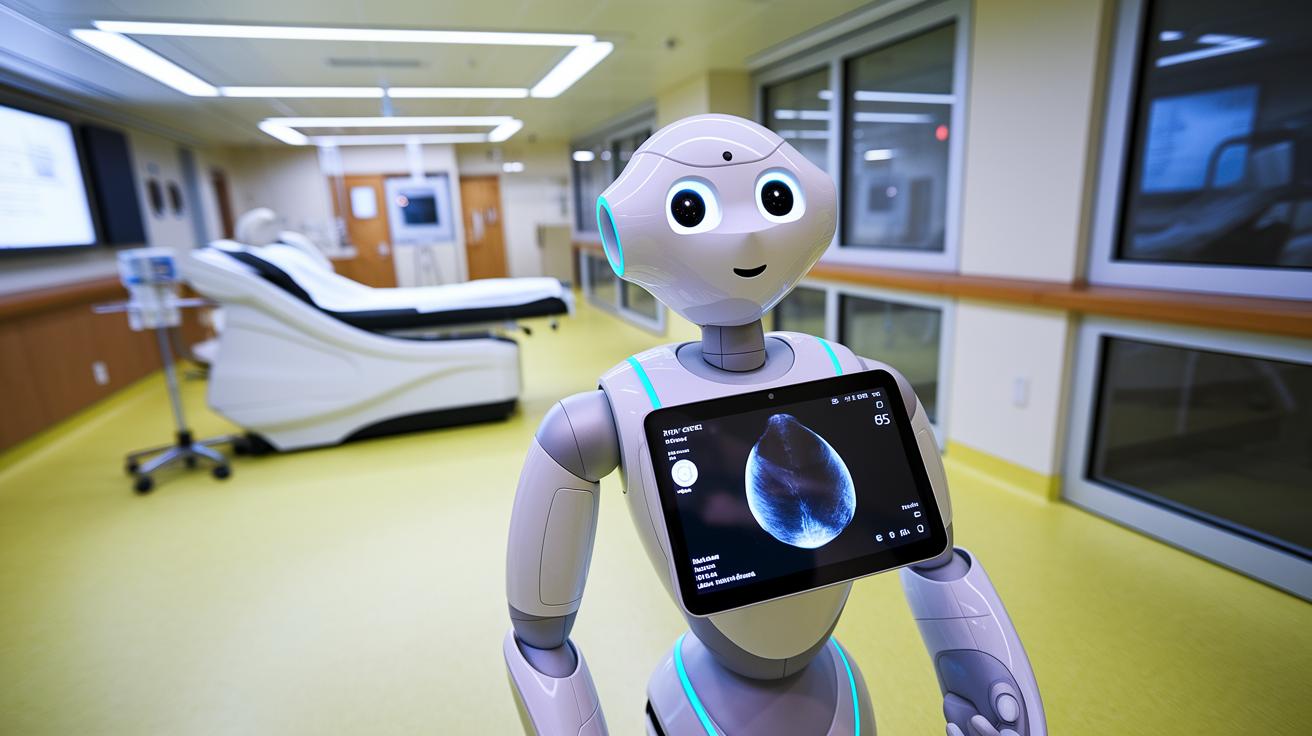
NLP lets machines grasp and respond to human language using practical methods. Think of tokenization as breaking text into individual words, like sorting colorful beads. Next, part-of-speech tagging steps in to label each word, calling them nouns, verbs, or adjectives, so we know their roles in the sentence. And then, dependency parsing connects the words, much like joining dots to reveal a clear picture.
You'll see these techniques in action everywhere. Virtual assistants use them to listen and answer questions, while chatbots rely on this process to chat with you smoothly. Sentiment analysis even picks up on the mood behind customer comments, and machine translation changes words from one language to another with ease.
Methods such as Bayesian reasoning boost accuracy. Meanwhile, semantic web mapping and ontological modeling help machines get context, so they provide results that make sense. Probabilistic models also back up things like speech recognition and semantic search, ensuring that machines do more than just hear, they truly understand everyday language.
Computer Vision: Visual Recognition in Artificial Intelligence
Computer vision turns regular images and videos into useful information with smart algorithms. It starts by outlining simple shapes using edge detection and then picks out important details with feature extraction. Convolutional neural networks help the system learn from many examples so that it can recognize objects by identifying common patterns.
Take a look at healthcare for an example. Hospitals now use AI to analyze medical scans, speeding up diagnoses significantly. This process is a bit like noticing a familiar face in a busy crowd, it makes sense of what might otherwise be confusing.
Other techniques add to the magic. Pattern clustering collects similar visual elements to improve accuracy, and methods like principal component analysis simplify complex details into their main parts. Together, these steps power applications like facial recognition, medical imaging, and automated video surveillance.
In real-life settings, security systems quickly spot odd movements, and in healthcare, anomalies in scans are flagged early. The combination of these techniques offers reliable support for both safety and patient care. As computer vision grows, it continues to promise even more breakthroughs that keep our communities secure and our services efficient.
Robotics and Autonomous Systems in Artificial Intelligence

Robotics brings together smart AI techniques with sensors and motors to build machines that can work on their own. These machines move around and interact with their world, whether in a quiet hospital operating room or a bustling warehouse. They rely on movement planners, like A* and RRT, that help them find the best path while steering clear of obstacles. Imagine a surgical robot doing a precise operation, its every move guided by real-time sensor data and carefully calculated paths.
Multiple robots can work together smoothly too. Agent-based optimization lets them share information and coordinate like a well-rehearsed team. And with cybernetic control systems, each machine keeps an eye on its own functions and adjusts on the fly. Think about a self-driving car that continuously checks its surroundings, using inputs from sensors, planned routes, and shared decision-making, to ensure a safe and efficient journey.
- Smooth movement is powered by autonomous locomotion systems.
- Movement planners decide the best route.
- Agent-based optimization makes teamwork among robots possible.
- Cybernetic controls help each robot monitor and adapt efficiently.
These advanced systems are making a big impact in many areas, from organizing large warehouses to helping self-driving cars navigate busy roads with confidence.
Expert Systems and Fuzzy Logic Subfields of Artificial Intelligence
Expert systems use specialized knowledge stored as rules to make decisions. They work by imitating how experts think, following clearly defined instructions. For example, imagine a medical diagnostic tool that uses a set of rules to suggest treatments based on a patient’s symptoms, much like how an experienced doctor would diagnose a case.
Fuzzy logic, on the other hand, breaks away from the strict yes-no model. It deals with uncertainty by working in shades of gray instead of clear black-and-white answers. Think of it like a dimmer switch that adjusts the light gradually. A smart appliance, for instance, might use fuzzy logic to fine-tune its temperature settings, making small adjustments that a simple on/off system could miss.
- Rule-based systems help computers look at conditions with precision.
- Decision support tools offer clear recommendations using organized knowledge.
In industrial settings, fuzzy logic smoothly handles vague input. This approach keeps control steady and reliable, even when situations aren’t exactly defined.
Evolutionary and Swarm Intelligence Subfields of Artificial Intelligence

Evolutionary algorithms mimic nature’s way of working by using processes like selection and mutation. Think of it as a system that adapts over time, much like living creatures learn to survive in changing environments. This method shines when it comes to tackling tough tasks like scheduling, fine-tuning designs, and charting the best routes in distributed setups.
Swarm intelligence, in contrast, draws inspiration from the way animals such as ants, birds, and fish move and work together. Imagine watching a flock of birds smoothly change shape as they fly, this is similar to how simple agents in a swarm coordinate to handle tasks like sharing resources and planning routes. Their natural teamwork helps them quickly adjust to new situations, making operations flow more smoothly in dynamic environments.
- Evolutionary models use a kind of genetic strategy to find better solutions.
- Swarm algorithms are a key example of nature-inspired computing.
Both techniques rely on group-based approaches to search for the best answers and adjust to challenges. They show how lessons from nature can lead to more inventive and flexible ways to handle complex problems.
Knowledge Representation and Reasoning Subfield of Artificial Intelligence
Knowledge representation takes raw data and turns it into well-organized information using methods like semantic networks, ontologies, and logic programming. Think of it like a smart security system that sorts access rules just as a library organizes books, clear, precise, and easy to find. Imagine a system that links different people or items, much like connecting friends on a social network, so it can quickly answer questions like "Who is on this project team?" This way, AI systems store details in a format that makes searching a breeze.
Once the data is set up neatly, reasoning steps in to dig deeper. Techniques such as constraint solvers, Bayesian networks, and hybrid neuro-symbolic methods help the AI draw new conclusions from the data. Picture an AI-powered financial dashboard analyzing vast datasets like an expert to spot unusual trends or risks. These systems don’t just store information, they evaluate rules and predict likely outcomes. In healthcare, they power decision support tools that suggest the best treatment plans while flagging potential issues early. In finance, they help uncover transaction discrepancies and model market behaviors with clarity.
Here are some key takeaways:
- Knowledge structuring using semantic networks and ontologies.
- Reasoning through constraint solving and probabilistic models.
- Real-world applications in web mapping, healthcare decision support, and financial analysis.
The blend of knowledge representation and reasoning enables AI to store information smartly and extract meaningful, actionable insights from large datasets.
Emerging Subfields and Future Directions in Artificial Intelligence

AI is quickly expanding into exciting new areas that challenge the usual way we view technology. Researchers are diving into quantum machine learning, a field that uses quantum ideas to speed up tough calculations. Imagine work that used to take hours now being done in seconds. At the same time, AI-driven biotechnology is on the rise, and artists in science are exploring personalized gene therapies that could change healthcare as we know it.
Neuro-synthetic interfaces are also starting to gain traction. This new avenue blends neuroscience with AI to build systems that connect with the human brain. Think about devices that might one day help someone regain lost senses or control prosthetic limbs seamlessly. And then there’s AI in space exploration. In this field, algorithms are being developed to manage huge amounts of star data and safely guide missions into the great unknown.
The tech world is also buzzing about the mix of AI, smart devices, and blockchain. By pairing edge AI that offers real-time analysis with decentralized data methods, tech experts hope to boost data reliability and efficiency. These innovations could transform everything from smart cities to modern factories. Along the way, there’s a strong focus on building models that are both clear and ethical, ensuring that progress remains transparent and responsible.
The future looks even more promising as new research continues to break boundaries. Integration methods are the key to making all these different elements work together. It’s an exciting time as we steer AI toward a more connected and intelligently managed future.
Final Words
In the action, we explored a range of artificial intelligence subfields. The article walked through machine learning, deep learning, natural language processing, computer vision, robotics, expert systems, and more. Each section explained how these areas power real-world applications, from healthcare solutions to dynamic autonomous systems. We also touched on emerging research trends that shape tomorrow's technology. This comprehensive look leaves a sense of optimism and clarity as AI continues to evolve and transform daily lives.
FAQ
What are the subfields of artificial intelligence?
The subfields of artificial intelligence refer to specialized areas such as machine learning, deep learning, natural language processing, computer vision, robotics, expert systems, fuzzy logic, and knowledge representation.
What are the main areas or branches of artificial intelligence?
The main areas or branches of artificial intelligence typically include perception, reasoning, learning, and action. Some sources add natural language processing, computer vision, and robotics to form broader classifications.
What is artificial intelligence and what are some examples?
The definition of artificial intelligence involves systems that simulate human reasoning and learning. Examples include virtual assistants using natural language processing, fraud detection through machine learning, and image-based diagnostics in healthcare.
What does the term “1.0 branches of Artificial Intelligence” refer to?
The term “1.0 branches of Artificial Intelligence” generally points to early foundational divisions in AI research, which often include logical reasoning, rule-based systems, and basic knowledge representation techniques.
Where can I find detailed resources, such as PDFs or encyclopedia pages, on AI subfields?
The phrase points to online resources where comprehensive PDFs and entries, like those on Wikipedia, describe various AI subfields, their methodologies, and practical applications in clear and accessible terms.
What are some practical examples of AI applications?
Practical AI applications include virtual assistants that process language, computer vision systems for object detection, robotics for automated tasks, and rule-based expert systems used to support decision-making.

